
Tadeusz Wincenty Skrok, born 1923 in Sosnowiec, Poland
In 1920, my Polish grandparents left Buffalo, New York. They moved to Poland with my American born aunt Helena and uncle Czesław for several years. My grandfather Jan Skrok returned to America and arrived in New York 2 Feb 1923. Soon after, my Uncle Ted—Tadeusz Wincenty Skrok–-was born in Sosnowiec, Kieleckie, Polska on 11 February 1923.
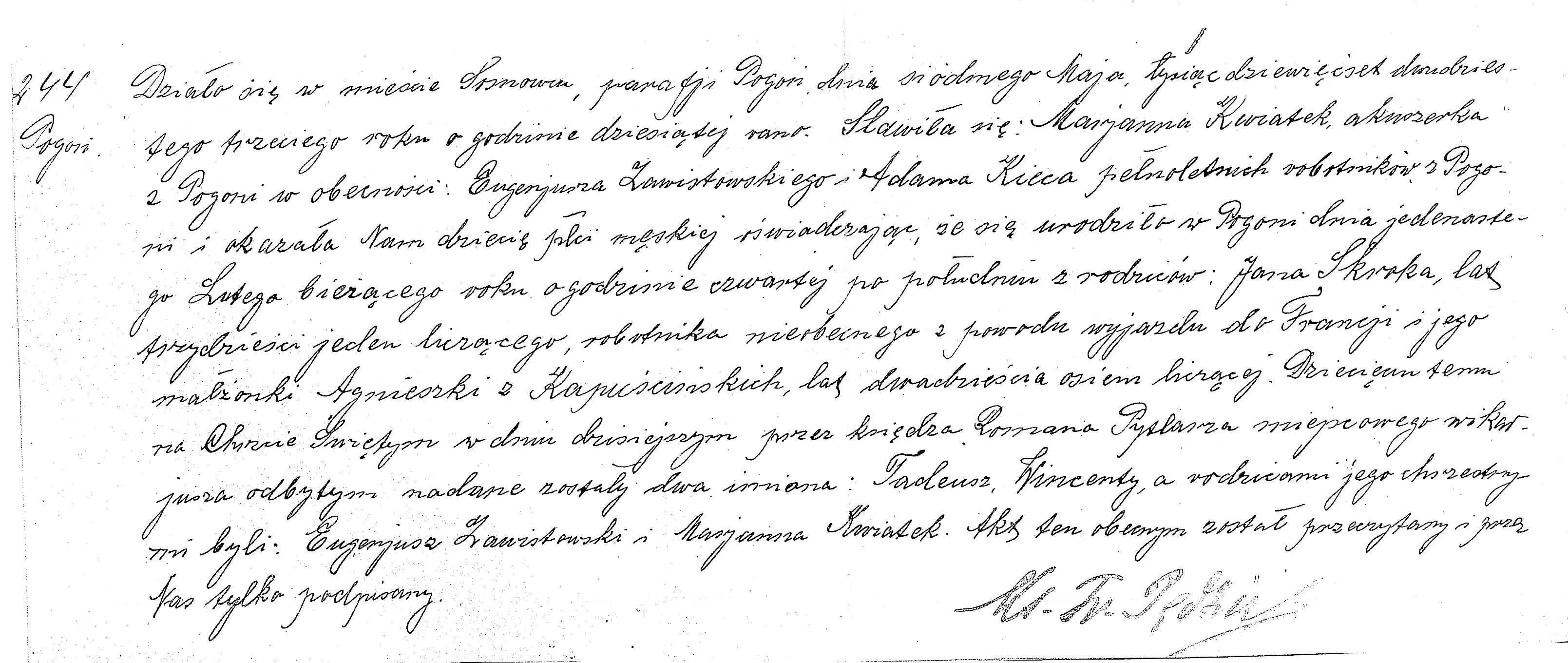
It took place in the town of Sosnowiec, parish of Pogoń, on the seventh day of May in the year 1923 at 10 o’clock in the morning. Marjanna Kwiatek, a midwife from Pogoń, appeared in the presence of Eugeniusz Zawistowski and Adam Kiec, adult laborers from Pogoń, and presented to us a male child, declaring that he was born in Pogoń on the eleventh day of February of the current year at four o’clock in the afternoon, to parents: Jan Skrok, aged 31, a laborer absent due to travel to France, and his wife Agnieszka née Kapuścińska, aged 28.
This child was given two names, Tadeusz Wicenty, during a holy baptism held today by the local vicar, Father Roman Pyslasz. The godparents were Eugeniusz Zawistowski and Marjanna Kwiatek. This record was read to the present persons and signed only by us.
Tadeusz was baptized 7 May 1923 in the Kościół św. Tomasza Apostoła [Church of St. Thomas the Apostle] in Pogoń, a neighborhood in Sosnowiec. Midwife Marjanna Kasprzyk Skrok Kwiatek presented the baby. She was the mother of Jan Skrok, Tadeusz‘ grandmother, and his godmother!
Once in Buffalo, Jan Skrok declared his intention to become a citizen, and applied for his wife and children to join him in America.
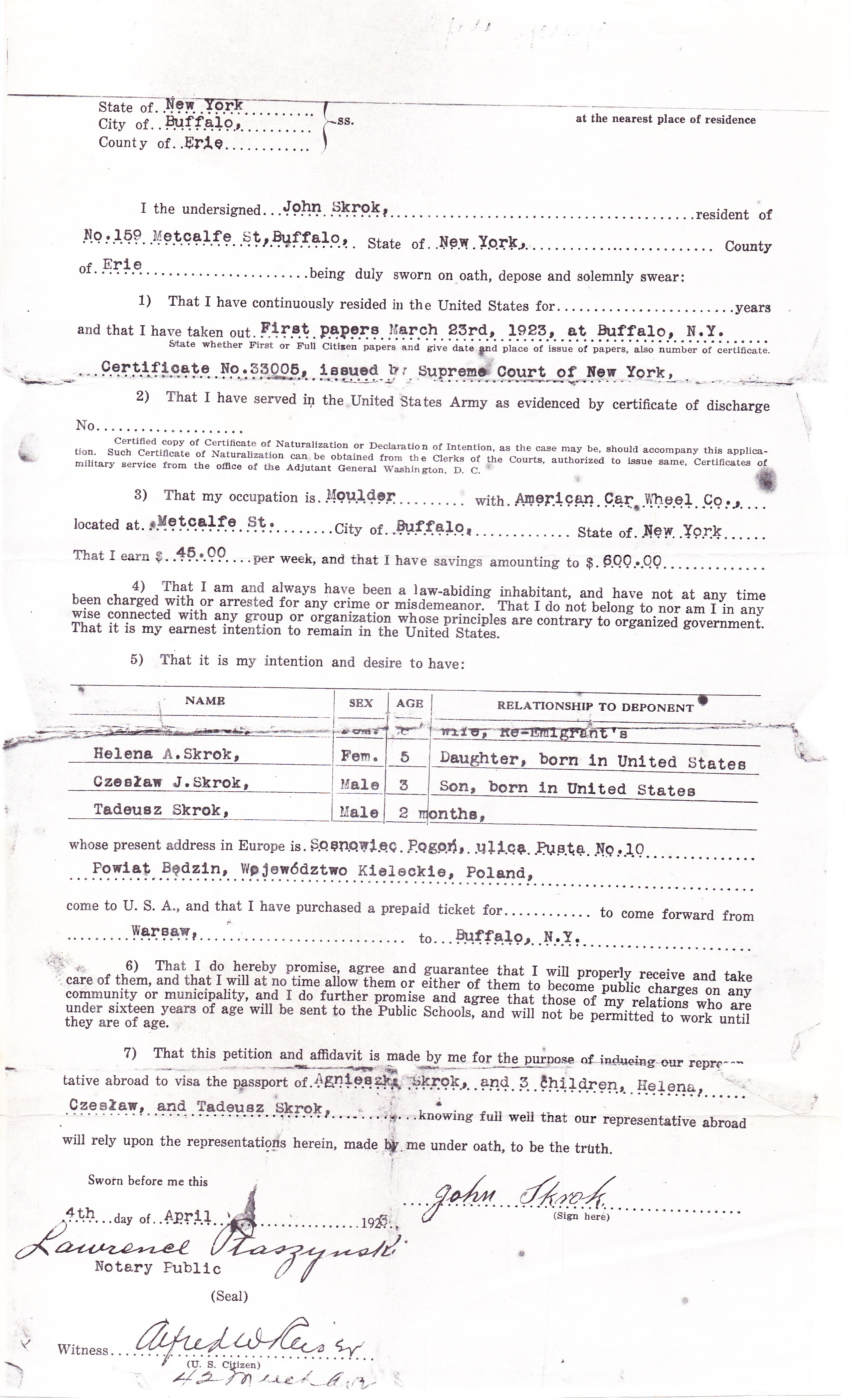
In Poland, Agnieszka Kapuścińska Skrok and the children visited her mother, Marianna Witoń Kapuścińska, in her birthplace of Gnieszowice, Sandomierz in the eastern side of Kielce Voivodeship in Poland.
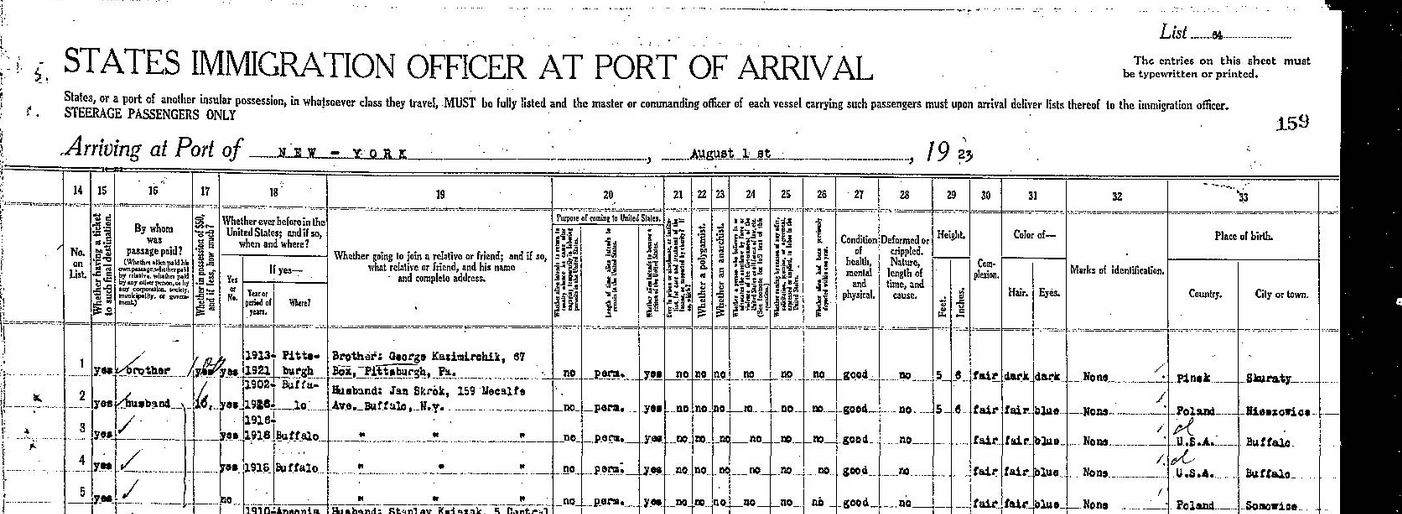
Later that year, Agnieszka Skrok traveled with an American passport and visa that had a photo of herself with her three children, including new baby Tadeusz. They arrived in New York on the steamship Lituania on 1 August 1923.

Because he was a minor, Tadeusz Wincenty Skrok became a naturalized citizen when his father Jan Skrok successfully petitioned for naturalization in 1930.
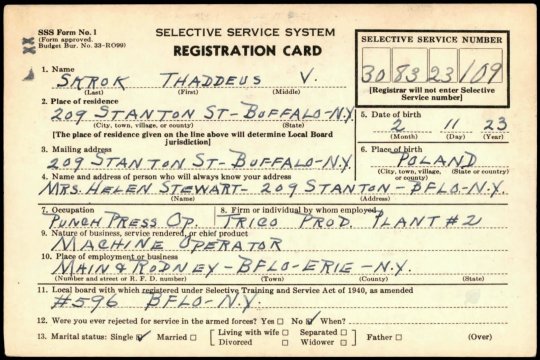
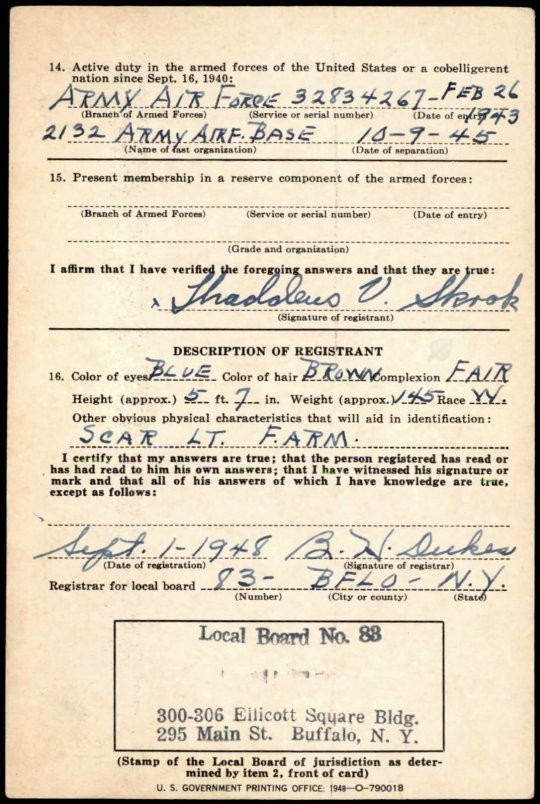
Thaddeus Vincent Skrok was his name in English, but he was called Ted or Teddy. He served in the Army Air Corps in the Pacific in World War II, and registered for the Korean draft in 1948.
Thaddeus V. Skrok and Angeline E. Farszmil married in Buffalo on 29 June 1963.
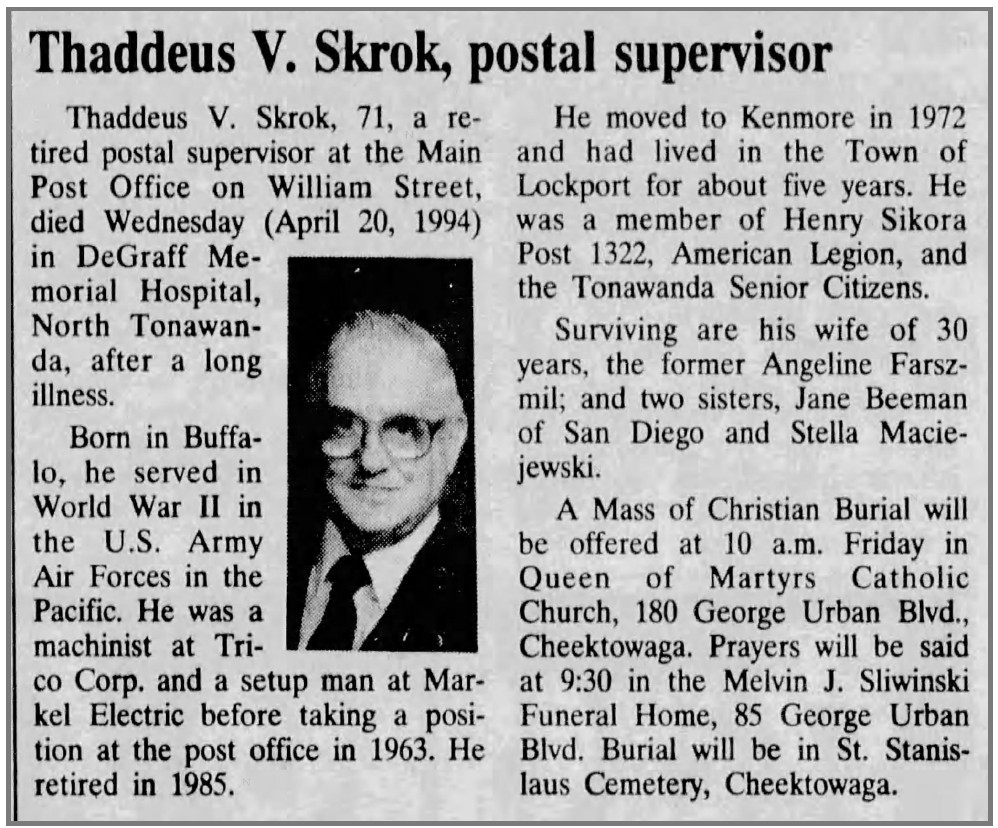
Thaddeus V. Skrok worked for the United States Post Office and was Postmaster for several locations before retiring from the Main Post Office on William Street in Buffalo in 1985.
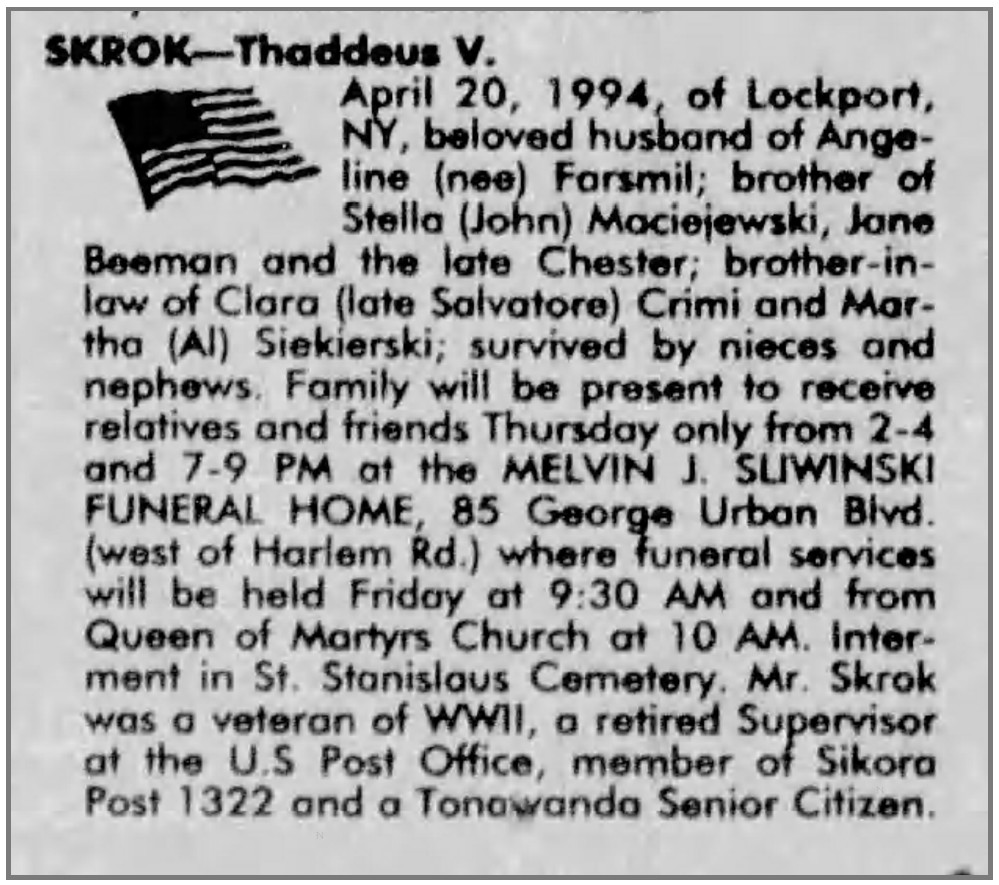
His death notice listed his wife, siblings, and in-laws.
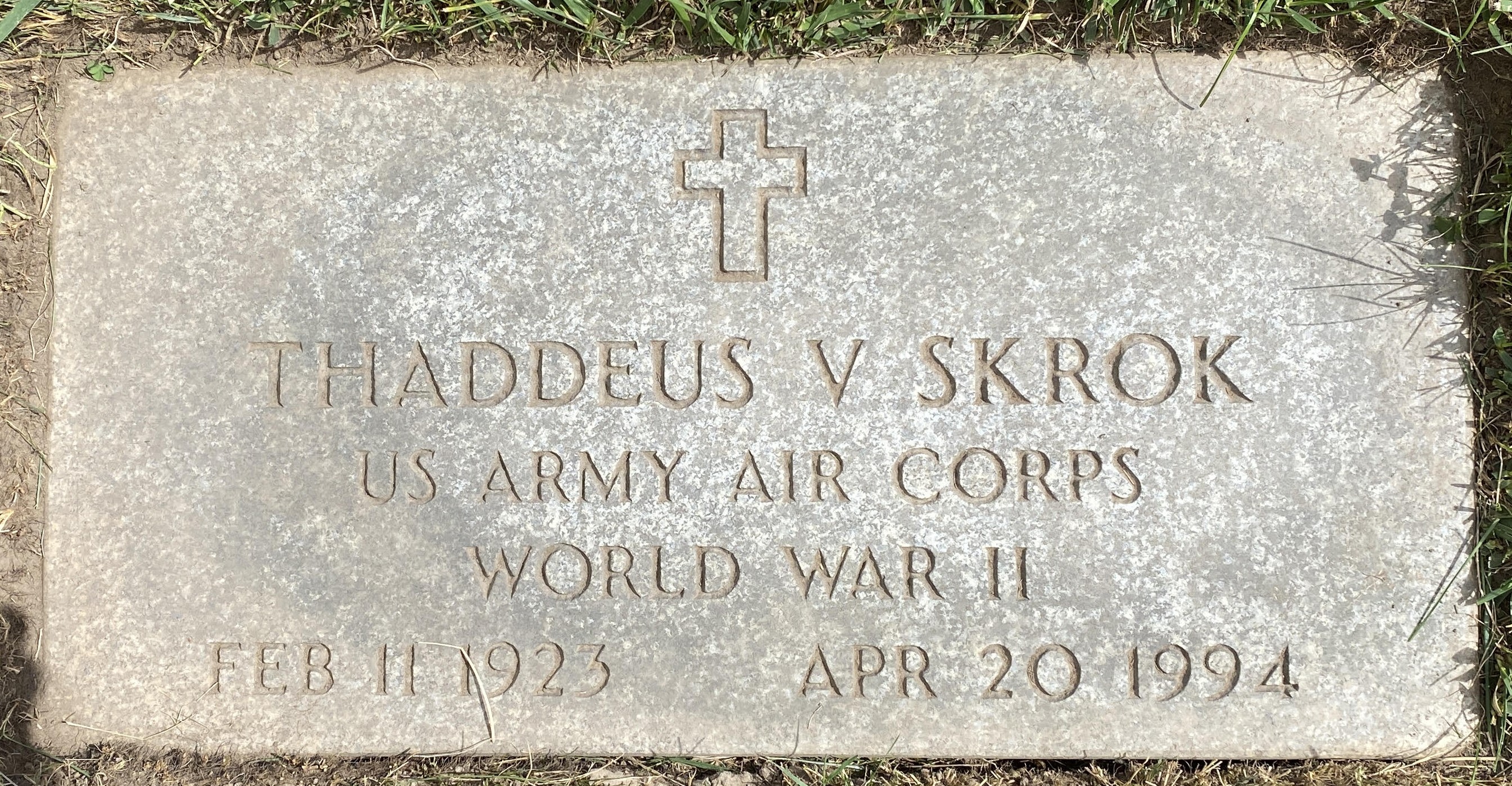
Thaddeus V. Skrok was laid to rest in Saint Stanislaus Bishop and Martyr Roman Catholic Cemetery in Cheektowaga, Erie, New York.
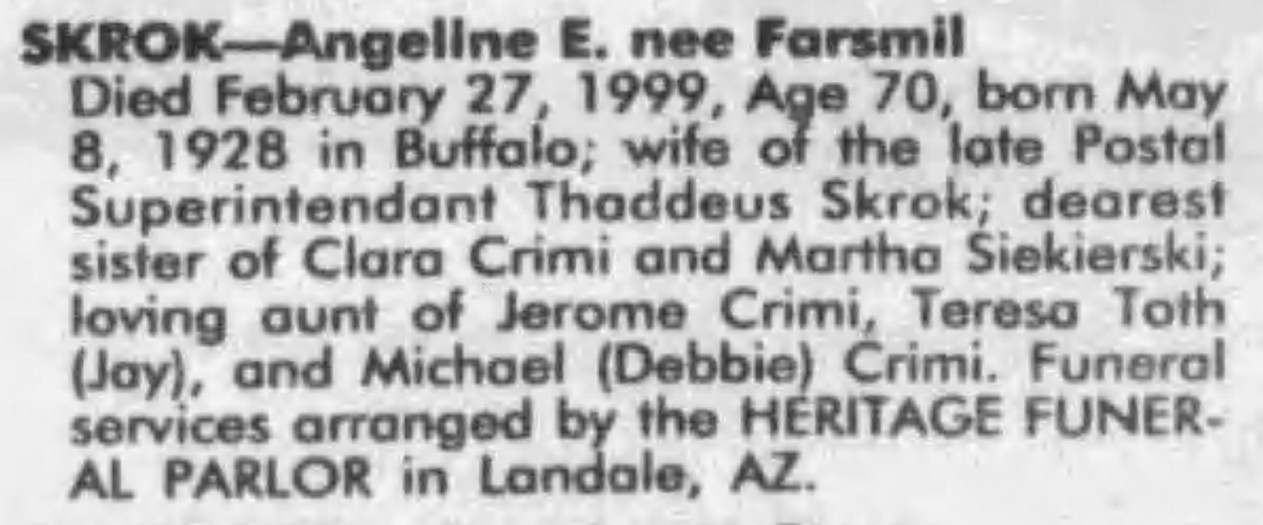
Ted‘s widow Angeline E. Farsmil Skrok died 27 Feb 1999 and was laid to rest in West Resthaven Park Cemetery in Glendale, Maricopa, Arizona.
As a child, I knew Uncle Ted had been born in Poland, because it was sometimes an issue at the border between Canada and the United States. If the border agent looked into the car and asked “Citizens of what country?” we were fine, since everyone would reply “United States.” But if the question was “Where were you born?” my uncle would reply “Poland,” and we would be pulled over, and he would present his documentation. In the 1950s and 1960s, that was all that was needed. Americans and Canadians could easily cross the Peace Bridge between Buffalo, New York, and Fort Erie, Ontario, Canada, and seldom were asked for documentation. We did it regularly to visit relatives and friends in Canada and the amusement park at Crystal Beach.
 My Family History Research